

Manufacturing Week 2026
This is where the event information goes


12 Oct 2026
News
The 2026 Wage and Benefit Survey from Caldwell County Economic Development shows how local employers compete for talent, highlights hiring challenges, outlines the benefits offered, and shares expectations for employment changes in the coming year. The survey covers manufacturers, government, logistics, construction, utilities, and professional services, offering a broad look at Caldwell County’s business community.
The results show that Caldwell County employers offer strong benefits and keep close ties with schools and workforce partners. However, many businesses still face open jobs, employee turnover, and tough competition for production, maintenance, and technical roles.
This mix of findings gives local employers helpful information for workforce planning and points out areas for economic development leaders to focus on.
Caldwell County employers provide many of the benefits that workers look for when choosing a job.
The survey reports that:
The data shows that employers invest in more than just base pay. For 53% of surveyed organizations, benefits make up 16% to 20% of total compensation. On average, employers offer 17 vacation or personal days, 8.5 sick days, and 10 paid holidays each year.
These results are good news for workers. Employers in Caldwell County offer well-rounded compensation packages with health coverage, paid time off, retirement benefits, and more than just hourly pay.
Even with strong benefits, employers still face workforce challenges.
Participating employers reported an average of 11 job openings per company, while 87.5% reported at least 10 open positions. The average turnover rate across all participating sectors was 17%.
Manufacturing and technical jobs are especially hard to fill. Installation and maintenance roles are the toughest to recruit at 14.29%, followed by production and manufacturing at 13.33%. These jobs are also the hardest to keep filled.
Since half of the survey respondents are from manufacturing, these findings are especially important.
The survey shows that demand for workers is still strong. Since early 2025, 62.5% of respondents have grown their workforce by at least 1%, and 31.25% saw no change. Looking ahead to early 2027, 68.75% expect to add more jobs.
The survey gives local wage benchmarks that employers can use to review their pay strategies.
For full-time, non-exempt positions, participating employers reported these average hourly wages:
The report compares the $21.00 median hourly wage for skilled full-time workers in Caldwell County to $22.57 across North Carolina and $36.44 for the U.S. average in private nonfarm jobs. These numbers are helpful for comparison, but they cover different areas and should be viewed with that in mind.
Local wage data shows big differences by job type. Manufacturing employers pay an average of $48 for controls engineers, $47.94 for mechanical or industrial engineers, $32.50 for welders, and $30 for CNC machinists. Jobs focused on production usually pay less, like $19.12 for machine operators and $18.92 for manufacturing associates.
The survey points out ways employers can address workforce challenges without only raising base pay.
Flexible work arrangements represent one opportunity. Forty percent of respondents currently offer flexible schedules, while another 47% are reviewing their options. Among participating businesses, 60% offer part-time positions, 47% use hybrid work arrangements, and 33% offer compressed workweeks.
Shift compensation also presents an opportunity, particularly for employers competing for production and operational workers. Two-thirds of respondents do not offer shift premiums. Among employers that do, the average premium is $0.47 for second shift, $0.93 for third shift, and $1.43 for weekend shifts.
Workforce training is another area with room to grow. Sixty percent of respondents use internships, 47% take part in business tours, and 40% use job shadowing. More formal programs are less common, with 13% offering apprenticeships and 13% running workforce academies.
Growing these programs could help connect students, workers, and employers, and give businesses more ways to develop talent for hard-to-fill jobs.
One of the most important takeaways goes beyond the numbers.
Caldwell County Economic Development can gather this kind of local workforce insight only when businesses participate and share information. The 2026 survey includes detailed data on pay, benefits, hiring, retention, staffing, and workforce development, while keeping individual responses confidential.
These relationships give the economic development team insights that state and national data cannot offer.
The survey also shows how local employers connect with workforce resources. All participating organizations named local four-year colleges as a primary recruiting source. Of those using workforce training, 67% work with Caldwell Community College & Technical Institute. NC Works, Appalachian State University, Catawba Valley Community College, and other groups are also involved.
This network helps Caldwell County Economic Development have better conversations with employers, educators, workforce groups, and potential new businesses.
The 2026 Wage and Benefit Survey does not offer a one-size-fits-all answer for every Caldwell County employer. Each industry, job type, and business model needs its own pay strategy.
But it does give something practical — a local benchmark.
Employers can use the survey to compare wages, benefits, turnover, hiring challenges, and workforce practices with other local businesses. Industry leaders can spot areas where their pay packages might need updating. Community leaders can see where workforce demand is high. Site selectors can use this information to better understand the local labor market.
Caldwell County Economic Development can help businesses make sense of local workforce data, connect with education and workforce partners, and find resources to support hiring, retention, and growth.

This is where the event information goes

Move right into one of our existing manufacturing buildings. The infrastructure is in place and a trained workforce is ready.
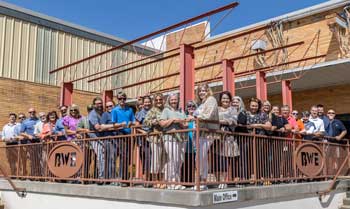
Caldwell County ranked 20th out of North Carolina’s 100 counties for wage growth in 2023. Since 2015, wages have grown an impressive 51.5%.

Life in Caldwell County can be full of adventure. Spend the day exploring parks, mountains, whitewater rafting, kayaking, hiking and biking.

Record numbers of new businesses and industries have registered in Caldwell: 250-500 each year since 2018. The CCC&TI Business Center is ready to assist.

NC has increased production of renewables by nearly 52%, double the average of all 50 states
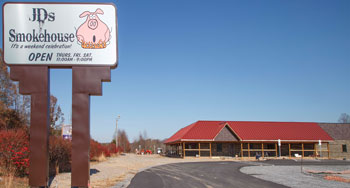
Explore the Caldwell County Itinerary for food, shopping, highlights, lodging and adventures! We invite locals and visitors to delight in the journey and the destination.
Caldwell County is building on its historic manufacturing legacy while embracing the industries of tomorrow. With affordability, a strategic location, and a skilled workforce, the county is a prime destination for business growth and investment.

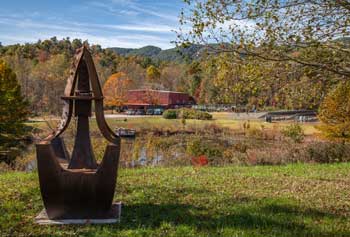
Caldwell County has the most extensive collection of permanent public outdoor sculptures per capita in the U.S. Our annual Sculpture Celebration is the largest in the South.

Powered by an economy that has hit its stride and turbocharged by a track record of innovation, Caldwell County is the best of NC.

Whether we’re celebrating art, butterflies, blackberries, BBQ or wine, the calendar is full of Southern charm.

The Blue Ridge foothills, Pisgah National Forest and Wilson Creek are our playgrounds for biking, off-roading, watersports, hiking, hunting, fishing and camping.
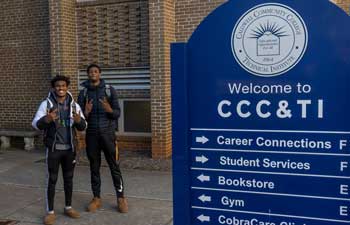
CCED works closely with CCC&TI and local manufacturers to meet the workforce needs of employers.
Explore scenic vistas, historical sites, art, breweries, wineries, eateries and more along this world famous route.