CCC&TI’s BioWork Powers Caldwell County’s Life Sciences Workforce
12 Dec 2025
News
Caldwell Community College & Technical Institute (CCC&TI) is preparing Caldwell County’s workforce for the high-demand careers of tomorrow, offering training programs that directly support emerging industries across North Carolina. As one of Caldwell County Economic Development’s key partners, CCC&TI helps ensure that local talent is aligned with employer needs in biotechnology, advanced manufacturing, and other rapidly growing sectors.
BioWork: A Pathway to Life Sciences Careers
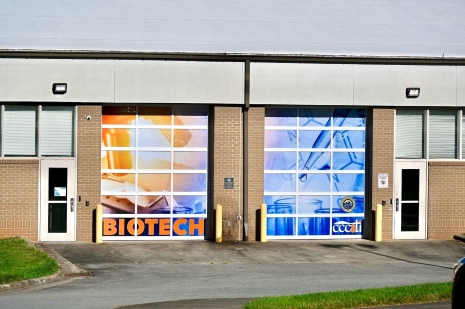
CCC&TI’s BioWork program connects Caldwell County residents directly to life sciences and biomanufacturing opportunities.
Those sectors are booming in North Carolina, with more than 840 companies employing over 75,000 people and generating an estimated $82 billion in annual economic activity. As foremost industry leaders like Pfizer, Merck, Thermo Fisher Scientific, and Novo Nordisk expand throughout the state, demand for skilled bioprocessing talent has never been higher. The 136-hour intensive certificate course prepares students for entry-level roles in bioprocessing, pharmaceutical manufacturing, and chemical production. Instructor Patrick Sullins, who brings eight years of industry experience from Baxter, Merck, and Novartis Gene Therapies, says the program leverages the region’s manufacturing heritage.
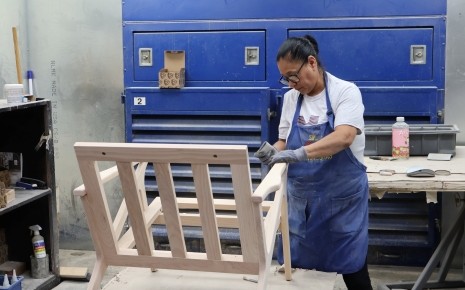
“Western North Carolina has deep manufacturing roots in furniture, textiles, and more,” Sullins explains. “For people in the region who are hardworking and mechanically skilled, BioWork bridges that gap and helps people apply those abilities in a new, high-demand industry that benefits the community.”
Real-World Training, Hands-On Technology
The BioWork program helps students gain industry-aligned experience in:
FDA regulations
Contamination control
Chemistry and biology fundamentals
Manufacturing processes from raw materials to finished products
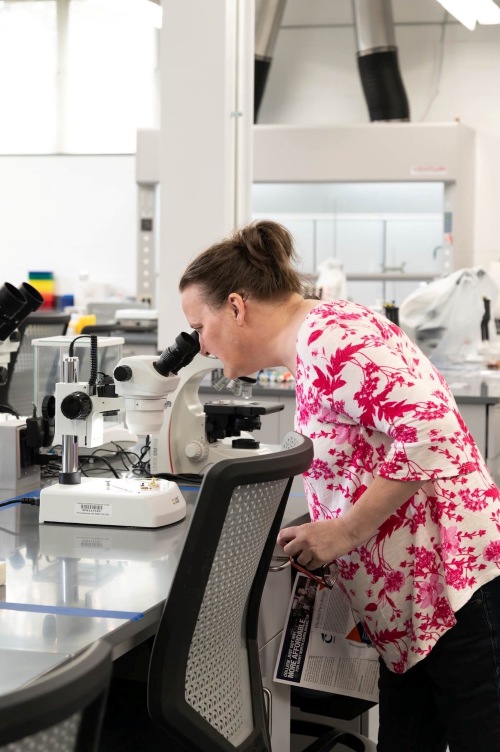
A highlight of the program is CCC&TI’s fully functional clean room, a rare teaching resource that enables students to work with pharmaceutical-grade equipment typically inaccessible in active production facilities. Grants and new technology, including an ultra-pure water system, expanded microbiology labs, and endotoxin testing equipment, continue to enhance the program’s capabilities.
Built with Industry. Built for the Region.
BioWork serves both individual students and local employers, with customized training tailored to meet specific workforce needs.
“We collaborate with industry partners, hold stakeholder meetings, and adapt our curriculum based on employer input,” Sullins says.
Looking ahead, the college is expanding its biotechnology associate degree program, exploring university partnerships, and conducting outreach to high schools and underrepresented communities. Scholarship opportunities and multiple annual cohorts help open doors for anyone seeking a life-changing career.
Sullins believes the region is uniquely positioned for growth.
“If we can train a local workforce, companies will see this region as a viable place to grow,” he said. “Data suggests that North Carolina workers are loyal and are more likely to stay with a job long-term, which is appealing for employers.”
Preparing for the future
Initiatives like BioWork help CCC&TI ensure that Caldwell County’s workforce is prepared for high-demand, high-wage careers in the life sciences, entrepreneurship, advanced manufacturing, and other fields. By connecting local talent with statewide industry opportunities and providing hands-on, customized training, CCC&TI is preparing the region for the jobs of tomorrow, driving economic growth, and strengthening the community.
Part 1 of a two-part series on workforce development at CCC&TI. Part 2 will explore the college’s Small Business Center and its role in supporting entrepreneurship throughout Caldwell County.
Each October, communities across America celebrate Manufacturing Day, a nationwide effort to highlight the importance of manufacturing and the incredible people who make it possible. On October 3, 2025, Caldwell County Economic Development joins this celebration with pride as we honor our community’s long and rich history of manufacturing and...
Caldwell County Economic Development invites you to the next Caldwell Tech Talk, a monthly meetup focused on growing our region's tech ecosystem. Whether you're a seasoned professional, a new entrepreneur, or a student passionate about innovation, this event is an opportunity to connect, learn, and collaborate.When is the next Tech...
Workforce readiness has become a defining factor in regional competitiveness and corporate success. Economic development professionals and corporate executives are facing unprecedented challenges, whether it’s demographic shifts, evolving immigration policies, or the rapid pace of technological innovation, all of which are reshaping the very foundation of the American workforce.Earlier this...
Meander the Blue Ridge Parkway and Historic Happy Valley
Meander the Blue Ridge Parkway and Historic Happy Valley
Explore scenic vistas, historical sites, art, breweries, wineries, eateries and more along this world famous route.
Eat and Play North Carolina
Eat and Play North Carolina
Explore the Caldwell County Itinerary for food, shopping, highlights, lodging and adventures! We invite locals and visitors to delight in the journey and the destination.
Entrepreneurship is Thriving
Entrepreneurship is Thriving
Record numbers of new businesses and industries have registered in Caldwell: 250-500 each year since 2018. The CCC&TI Business Center is ready to assist.
NC is America’s Top State for Business
NC is America’s Top State for Business (CNBC, 2022)
Powered by an economy that has hit its stride and turbocharged by a track record of innovation, Caldwell County is the best of NC.
Free Job Training for Qualifying Businesses
Free Job Training for Qualifying Businesses
CCED works closely with CCC&TI and local manufacturers to meet the workforce needs of employers.
2025 Key Indicators Report
Caldwell County is building on its historic manufacturing legacy while embracing the industries of tomorrow. With affordability, a strategic location, and a skilled workforce, the county is a prime destination for business growth and investment.
Record-Breaking Private Sector Wage Growth
Record-Breaking Private Sector Wage Growth
Caldwell County ranked 20th out of North Carolina’s 100 counties for wage growth in 2023. Since 2015, wages have grown an impressive 51.5%.
Existing Manufacturing Space Available
Existing Manufacturing Space Available
Move right into one of our existing manufacturing buildings. The infrastructure is in place and a trained workforce is ready.
Our Festivals Bring Neighbors Together
Our Festivals Bring Neighbors Together
Whether we’re celebrating art, butterflies, blackberries, BBQ or wine, the calendar is full of Southern charm.
Renowned “Adventure Towns”
Renowned “Adventure Towns”
The Blue Ridge foothills, Pisgah National Forest and Wilson Creek are our playgrounds for biking, off-roading, watersports, hiking, hunting, fishing and camping.
Our Mountains, Rivers and Lakes are Calling
Our Mountains, Rivers and Lakes are Calling
Life in Caldwell County can be full of adventure. Spend the day exploring parks, mountains, whitewater rafting, kayaking, hiking and biking.
NC is the No.1 Southeast State for Sustainability
NC is the No.1 Southeast State for Sustainability (Site Selection)
NC has increased production of renewables by nearly 52%, double the average of all 50 states
Smithsonian Celebrated Sculpture Gardens
Smithsonian Celebrated Sculpture Gardens
Caldwell County has the most extensive collection of permanent public outdoor sculptures per capita in the U.S. Our annual Sculpture Celebration is the largest in the South.